Snow Day Predictor for Michigan – A Perfect Snow Tool in 2026:
Michigan winters carry sharp changes. One morning can bring clear skies. The next can bring snow that shuts schools and slows travel. People want a simple way to judge risk. This guide covers the Snow Day Predictor for Michigan. It also explains how a modern snow-day calculator reads weather data and turns it into a clear, reliable number you can trust.
This page helps families, students, teachers, and commuters plan their day. Every section follows a single goal. Give people a clear view of their local snow-day chance with no complex terms. Every fact links back to real behaviour across Michigan schools and weather offices.
Check Snow Day Predictor for Michigan through ZIP Code:
Michigan has large weather swings. Each city has different risks. Schools often close when heavy snow hits before sunrise. Some districts shut down in light snow when roads ice over.
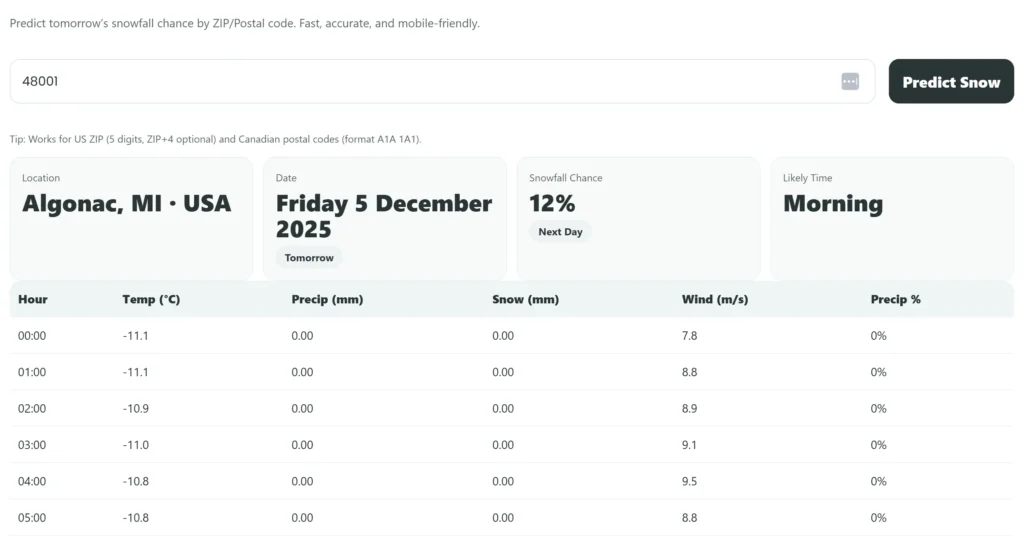
Predict tomorrow’s snowfall chance by ZIP/Postal code. Fast, accurate, and mobile-friendly.
Below is the snowfall prediction for Algonac City in the Snow Day Predictor for Michigan. You can check the snow chance for your desired city in another region through the snow predictor.
Today’s Snow Day Chance in Michigan:
Snow day chances rise when timing, snow depth, wind, and road treatment all line up. Snow Day Predictor for Michigan has two major snow drivers. Strong storms move in from the west. Lake-effect snow forms fast over Lake Michigan and pushes bands inland.
People often ask, “Is Michigan predicted to have a bad winter?” Weather agencies like the National Weather Service and the National Centres for Environmental Information track seasonal outlooks. Their reports show that colder seasons may bring stronger storms. This predictor uses recent patterns and real storm behaviour to update daily risk.
How Our Snow Day Predictor for Michigan Model Works:
A strong Snow Day Predictor for Michigan needs strong data. It reads current conditions, past patterns, and school behaviour. It uses weather data from national sources like NOAA and the National Weather Service. These groups track snowfall, wind, cold, and storm timing with high authority. This information creates the base layer for your local prediction.
People sometimes wonder, “How accurate is a snow day calculator? ”
Accuracy improves when the model watches how districts act after storms. Michigan schools close more often when roads turn slick before sunrise. Some close when heavy lake-effect snow hits rural bus routes. The model checks these patterns with each update.
Another common question asks, “How does AccuWeather predict so far ahead?”
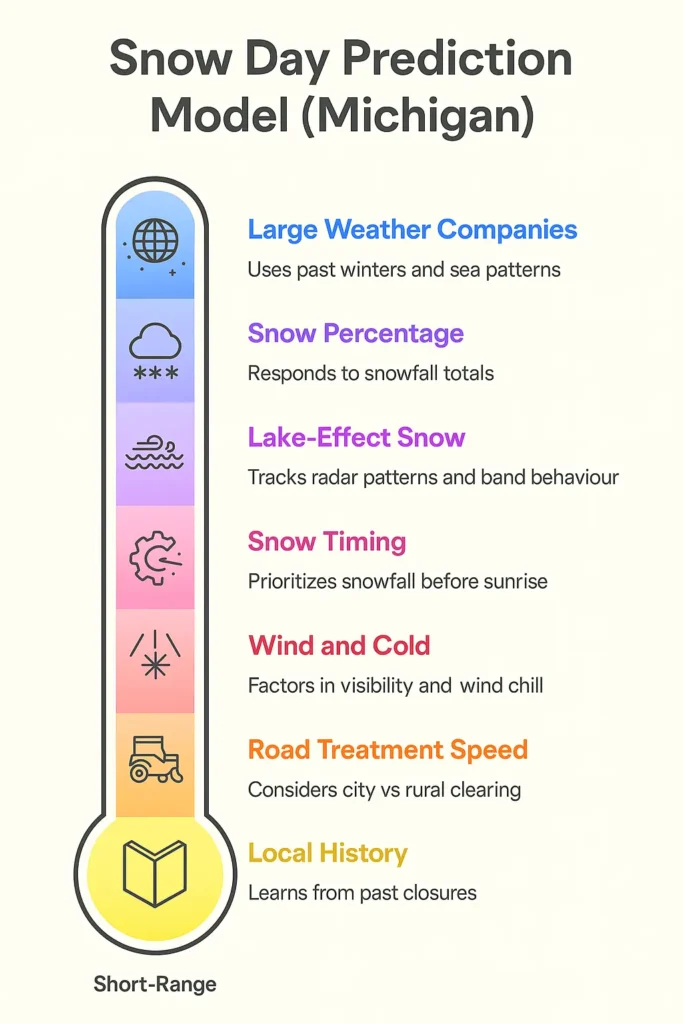
Large weather companies use long-range models built on past winters, sea patterns, jet stream shifts, and storm tracks. Long-range forecasts help show general trends. This snow day calculator uses short-range data because school decisions rely on near-term conditions.
This model tracks several Michigan-specific factors:
Snow Percentage:
Higher snowfall raises risk. Schools often respond when totals pass local limits.
Lake-Effect Snow:
Snow bands form fast over Lake Michigan. They hit one town hard and skip the next. The model checks radar patterns and past band behaviour.
Snow Timing:
Snow that falls before sunrise is the main cause of closures. Afternoon snow often leads to quiet roads in the morning.
Wind and Cold:
High wind drops visibility. Extreme wind chill forces some districts to close even with low snow.
Road Treatment Speed:
Cities like Grand Rapids clear roads fast. Rural routes may take longer. This changes closure odds.
Local History:
The model learns from past closures. Schools that close more often get a slightly higher base chance.
These factors shape the percentage you see after you enter your ZIP code.
Michigan School Closure Patterns:
School closure behaviour in Snow Day Predictor for Michigan follows clear patterns. Each region responds to storms in different ways. Terrain, bus routes, and road treatment shape these choices. Knowing these patterns helps people read their snow day chance with more confidence.
Schools close when morning roads turn unsafe. The highest risk comes when snow falls between 2 AM and 6 AM. Most closure decisions happen during this window. District leaders track radar, road reports, and local police updates before sunrise.
Michigan’s closure patterns shift by region:
Upper Peninsula
The Upper Peninsula sees long winters with heavy snow. Schools here handle large storms well. They close less often than people expect. Closures happen when blizzards reduce visibility. They also close when long bus routes turn slick. Rural districts across the UP move more slowly during storm clean-up. Sharp, cold, and strong winds also push some closures.
West Michigan
West Michigan faces heavy lake-effect snow. Bands form fast and hit narrow areas. One town can see whiteout conditions while the next stays clear. Schools close more often here when lake-effect bands stretch through the morning commute. Timing matters more than totals. A short burst at the wrong time can shut down several districts.
Detroit Metro and Southeast Michigan
Detroit Metro areas see fewer closures from lake-effect banding. They respond to system-driven snow instead. Traffic density plays a major role. Even mild snowfall can slow the entire region. Some districts close when snow mixes with freezing rain. Urban roads clear faster, but morning ice still forces delays.
Central and Mid-Michigan
Central Michigan sees steady winter storms. Schools balance risk with weather timing. They close less often than lake-effect zones. They close more often than the UP. Snow that hits around dawn shapes most decisions. Towns with slower road treatment may shut down on lighter snowfall.
People often ask, “Is Michigan predicted to have a bad winter?” Seasonal reports from NOAA track early signs. These reports include snowfall trends near Lake Michigan. These trends help shape predictions for closures each winter.
What Snow Day Percentages Mean in Michigan:
A snow day percentage helps families understand the real chance of closure. The number reflects local patterns. It works with Michigan-specific weather behaviour.
Here is how to read these numbers:
20 to 40 Percent:
- Risk stays low. Roads may be wet or slushy. Most schools will stay open. Some districts may delay if high winds drop visibility.
40 to 60 Percent:
- This is a mixed zone. Storm timing controls the outcome. Lake-effect bands may hit a few cities. Some townships may close. Many stay open. This range calls for early checks in the morning.
60 to 80 Percent:
- Risk grows. Snowfall may stack up overnight. Roads may ice before sunrise. Many districts across Michigan will monitor conditions. Closures often begin in this zone.
80 to 100 Percent:
- High risk of closure. Snow arrives before the commute. Wind may reduce visibility. Road crews may need more time to clear routes. Rural areas close first. Urban areas often follow.
Percentage Range | What It means | Typical Outcome |
20-40% | Low Risk | Schools Remain Open |
40-60% | Mixed Risk | Delay or Selective Closures |
60-80% | Solid Risk | Many Districts Monitor Conditions |
80-100% | High Risk | Closure very Likely |
Michigan Snowfall and Weather Trends:
Snow Day Predictor for Michigan winters follows long-term weather cycles. Statewide snowfall varies by year. Lake-effect patterns also shift. These shifts influence snow day risk each season.
The National Centers for Environmental Information keep detailed snowfall records. These records show clear averages across Snow Day Predictor for Michigan regions. The Upper Peninsula leads the state with the highest totals. Cities along Lake Michigan follow next. Detroit sees lighter snowfall but faces more ice and freezing rain.
Historic storms show how fast winter can turn. The Great Blizzard of 1978 remains one of the strongest storms in state history. It closed schools across Michigan for days. These historic events shape how districts understand risk today.
Michigan snowfall trends help the model read storm behaviour. Some winters bring early snow. Some bring late waves. The model updates as each storm forms. It reads timing, wind, and precipitation changes with each update.
Average Snowfall by Michigan Region:
Here are common ranges for yearly snowfall:
Marquette:
- Highest yearly totals in the state. Heavy lake-effect snow.
Grand Rapids:
- Heavy lake-effect snow hits this region often. Bands change fast.
Traverse City:
- Steady lake-effect snow with wide variations by month
Detroit:
- Lower totals. Higher chance of freezing rain and mixed storms.
Kalamazoo:
- Strong lake-effect bands. Closures rise when bands stall.
These averages guide baseline risk for each area.
Cities and Regions with Frequent Snow Days:
School districts with frequent closures share a few traits. They often face lake-effect snow. They may have long bus routes or fewer ploughs. Some sit in rural or wooded areas. These factors raise their risk.
Here are some areas with higher closure rates:
West Michigan Lake-Effect Zones:
- Strong bands create sudden whiteouts. Risk rises during pre-dawn hours.
Upper Peninsula Rural Routes:
- The distance between towns slows the morning clean-up. Closures rise when winds push snow across roads.
Northern Lower Peninsula:
- Mixed lake-effect and system-driven snow increases morning risk.
These areas see strong swings in conditions. That drives more closures.
Snow Day Predictor for Michigan Timing and Seasonal Trends:
Snow timing matters more than totals. Michigan storms often arrive in waves. These waves change closure patterns across the season. Here is the usual timeline:
November:
- Light snow starts the season. Few closures occur. Districts watch early patterns.
December:
- Stronger storms form. Lake-effect bands grow. Closures rise.
January:
- Peak winter. Most closures happen here. Deep cold and heavy snow align.
February:
- Storms stay strong. Some winters peak here.
March:
- Snow mixes with rain. Roads are icy in the early morning. Delays rise.
Families often ask, “When to expect the first snow in Michigan?”
Most cities see flakes in late October or early November. Northern towns may see snow earlier. This early snow sets the rhythm for winter.
Tools and Resources for Michigan Winter Weather:
People rely on clear sources when winter storms form. Accurate data or traditional data helps them plan school, work, and travel. Snow Day Predictor for Michigan has several trusted weather resources. These sources guide the predictions found in your snow day calculator.
National Weather Service:
- The National Weather Service tracks storms across Snow Day Predictor for Michigan. Their offices release alerts, watches, and warnings. These updates give real-time details on snow, wind, and cold.
NOAA:
- NOAA reports come from national weather models. These models shape most short-range forecasts. They update often and show storm tracks.
Michigan Department of Transportation:
- This group updates road conditions. They show where snow, ice, or traffic slowdowns appear. Their reports help families judge morning safety.
Local Weather Reports:
- Local stations follow town-by-town conditions. These updates show how fast snow builds and which roads slow down first.
These tools work with your snow day predictor for Michigan. Together, they provide a grounded look at daily risk.
Tips for Parents, Students, and Commuters in Michigan:
Families want guidance when winter weather arrives. Simple steps reduce stress and help people prepare.
Check Early:
- Most school decisions happen before sunrise. Check the snow day predictor for Michigan as soon as you wake up. Conditions can shift fast.
Watch Timing:
- Storm timing matters more than totals. Snow that arrives overnight raises the risk. Afternoon snow rarely closes schools the next morning.
Plan Backup Arrangements:
- Families should prepare for sudden closures. Set a plan for childcare if schools close. Students can pack homework the night before.
Check Road Conditions:
- View local road reports before leaving home. Ice forms fast in lake-effect zones. Roads in rural areas may remain slick longer.
Stay Updated:
- Weather shifts in minutes. Keep track of new alerts from the National Weather Service. Monitor changes in wind and visibility.
These steps help families handle winter storms with confidence.
FAQ’s:
Conclusion:
Snow Day Predictor for Michigan winter brings sharp changes in the weather. Storms shift fast. Lake-effect snow forms without warning. School closures follow timing more than totals. A snow day calculator helps people understand these patterns. It reads local conditions and updates often. It offers a clear risk number for every ZIP code in the state.
Families, students, and commuters want fast answers. They want simple guidance when storms form in the early morning. This guide explains how Michigan weather works. It shows how closures happen. It gives people the facts they need.
Use the tool to check your chance each day. Enter your ZIP code to see the most recent update. This helps you plan school, work, and travel with confidence.